
Search results for john Dewey's imaginative

E-books are now distributed via VitalSource
VitalSource offer a more seamless way to access the ebook, and add some great new features including text-to-voice. You own your ebook for life, it is simply hosted on the vendor website, working much like Kindle and Nook. Click here to see more detailed information on this process.
Library E-Books
We are signed up with aggregators who resell networkable e-book editions of our titles to academic libraries. These editions, priced at par with simultaneous hardcover editions of our titles, are not available direct from Stylus.
These aggregators offer a variety of plans to libraries, such as simultaneous access by multiple library patrons, and access to portions of titles at a fraction of list price under what is commonly referred to as a "patron-driven demand" model.
Letters to the Field: Curriculum Scholars’ Stories for Future Generations encapsulates a generation of scholars who revitalized the field of Curriculum Studies across North America in the mid-1970s, as well as the generations of scholars who immediately followed, all of whom are now themselves senior scholars. Rather than another edited work of reprints or new monographs, this volume seeks to do something special by providing an opportunity for this group of scholars to speak to their field about understandings they believe to be of significance. The strength of this book generally resides in two overarching factors. First, there is the depth and strength of this well-rounded, highly regarded group of scholars whose work speaks to the heart of the interdisciplinary nature of curriculum studies and curriculum theorizing. Second, as you might imagine, this is a significant moment in the United States when the very foundation of curriculum theory–critical inquiry and often an engagement with questions of race, queerness, disability, and the like–continues to be under attack in K-12 schools and universities across the United States. Contributors speak to the foundations of the field and the contemporary challenges that the field and schools of education more broadly must survive. Contributions to this important work are five to seven handwritten or, in the case of scholars who are unable to write, typed pages. There are also chapters that have accompanying photos and drawings. The reproduction of actual letters in the book lend authenticity and will appeal to readers by giving an intimate view into the thoughts and wishes of these scholars. We also understand that, similar to the challenge folks might face when handwriting a document, some writing might not be legible to all readers. Therefore, stable QR codes and/or hyperlinks to typed versions of handwritten chapters are included so that readers can easily look at typed versions alongside the handwritten work online. Letters to the Field makes an invaluable contribution to Curriculum Studies. By providing a history of the rationale used to revitalize the field, it will prove a valuable addition to the libraries of educators in a variety of disciplines.Perfect for courses such as: Introduction to Curriculum Theory; Introduction to College Teaching; Social Foundations of Education; History of American Higher Education; Traditions of Inquiry; and Introduction to Scholarship
More
E-books are now distributed via VitalSource
VitalSource offer a more seamless way to access the ebook, and add some great new features including text-to-voice. You own your ebook for life, it is simply hosted on the vendor website, working much like Kindle and Nook. Click here to see more detailed information on this process.
Library E-Books
We are signed up with aggregators who resell networkable e-book editions of our titles to academic libraries. These editions, priced at par with simultaneous hardcover editions of our titles, are not available direct from Stylus.
These aggregators offer a variety of plans to libraries, such as simultaneous access by multiple library patrons, and access to portions of titles at a fraction of list price under what is commonly referred to as a "patron-driven demand" model.
The history of presidential politics reached a new and significant milestone with the election of Barack Obama in 2008. It sparked great hope in America for greater racial equity and social justice. A Paradise to Regain: Post-Obama Insights from Women Educators of the Black Diaspora seeks to avert the likelihood of erasure of President Obama’s legacy of hope and possibility that every child, regardless of race, faith, and gender affiliation, can dream big and live to see his/her dream turn into reality. As women educators of color, we all agree that the socio-political climate prevailing in the United States of America, since the aftermath of the 2016 election, requires unprecedented agency. The book provides space for Black women educators–African Americans, Naturalized Black Americans, and Foreign-born Blacks from Africa, the Caribbean Islands and South America (e.g., Guyana)–to have a candid conversation with their young children—sons and daughters, nephews and nieces—about the roadblocks they are likely to face as minority youth of color in their pursuit of greatness and the reminder that they have a role model in President Obama to look up to in moments of extreme frustration and exasperation. Voices of engaged educators of color are indispensable to make sure that children understand that that despite a 360-degree turn from eight consecutive years of a reassuring message that “change had come,” that paradise had been gained, into the threatening message of “making America white again,” we count on them to regain the paradise. Perfect for courses such as: Racism and Education Inequality in the Lives of African-American Youth, Introduction to the African Diaspora, Equity and Diversity in Schools, Place, Language, Power and Knowledge, Global and Multicultural Education in the Secondary School, Issues in Urban Education, Culture Power and Education, Social Class Education and Pedagogy, Language, Culture, and Education, The Politics of Literacy and Race in Schools, Race and Racism in Education and Society, Race, Ethnicity and Linguistic Diversity in Classrooms and Communities, and Education and Society.
More
E-books are now distributed via VitalSource
VitalSource offer a more seamless way to access the ebook, and add some great new features including text-to-voice. You own your ebook for life, it is simply hosted on the vendor website, working much like Kindle and Nook. Click here to see more detailed information on this process.
Curriculum and pedagogy are the heartbeat of our schools. They encompass what we do and do not teach–what content and approaches we either choose or are mandated to choose, or leave out or are mandated to leave out. Curriculum entails the overall educational experience of schooling, while pedagogy is the art and craft of teaching–or the translation of curriculum into student knowledge and growth. Hence, curriculum and pedagogy are sociocultural phenomena that impact and are impacted by context (e.g., students, community, colleagues, geography, etc.). Once upon a time, curriculum and pedagogy were the spaces in which educators could exercise creativity and exploration, reflecting the individual needs of their students and communities. However, as political structures shifted and the standards movement took hold in the late 20th century, freedoms around curriculum and pedagogy began to fade with increased oversight over and standardization of “best practices” with greater emphasis placed on performance and efficiency. Pedagogical practices were soon framed around producing results (test scores, graduation rates, measurable learning objectives derived from prescribed state standards), while curriculum became a prescribed structure formatted to reflect state standards with an eye toward test performance. Curriculum and pedagogy were further impeded by hegemonic forces calling for censorship of teaching and curriculum, such as the ban on Ethnic Studies in Tucson, Arizona, and continued attacks on Critical Race Theory nationwide. Further, curriculum became a tool for concealing and/or silencing the experiences and voices of our diverse students, educators, and communities. The results of these phenomena are teachers feeling uninspired and deprofessionalized and students feeling devalued and unheard–especially marginalized students. Since curriculum and pedagogy directly impact the experiences of teachers and students, they must be transformed. However, how do we do that within today’s tenuous PreK-12 environment? How do we transform curriculum and pedagogy so that they reflect, liberate, and ensure justice for students and educators in preschools, elementary schools, middle schools, high schools and the content areas taught within them? Moving from Traditional to Transformative Curriculum and Pedagogy addresses these challenges by providing clear and direct guidance for current and aspiring educators committed to transforming the status quo in their classrooms and schools. Innovative and creative methodologies and practices that aspiring and practicing educators can use right away are the primary focus of this book. Because the editors and contributors are former or current PreK-12 practitioners and/or education scholars, this book is written for a broad educational audience. The editors and contributors provide preservice and practicing teachers entry points for transforming the educational landscape in favor of liberatory, transformative practices in PreK-12 schools across grade levels, content areas, school types, and geographic regions. Additionally, this book is ideal for teacher preparation programs as well as PreK-12 professional development, as this book guides readers through theoretical and empirical discussions, supported by hands-on applications that enable real-time application, and concludes with interactive features, like case studies, extension activities, and discussion prompts.
More
E-books are now distributed via VitalSource
VitalSource offer a more seamless way to access the ebook, and add some great new features including text-to-voice. You own your ebook for life, it is simply hosted on the vendor website, working much like Kindle and Nook. Click here to see more detailed information on this process.
Do you have the desire to build relationships with the special education teachers in your school or district but constantly feel weighed down by compliance issues? Special education teachers are leaving the field at alarming rates, and positive change through transformational leadership practices can help administrators build confidence and self-efficacy as leaders of special education programs and strengthen special education teachers’ commitment to remain in the field. In a book that guides an affective journey using John C. Maxwell’s teachings, Natasha Veale, a former special education teacher, professor of special education, and certified Maxwell Leadership consultant, demonstrates how to address administrators’ belief in their ability to become influential special education leaders and connect with their special education teachers, even without a background in special education. This book is ideal for pre-service and in-service assistant principals and principals, special education administrators, and general and special education teachers. Embedded school administrators’ anecdotes reveal experiences, challenges, and desires to build an emotionally supportive environment for their special education teachers. Practical advice and tips are offered to help administrators positively influence, individually consider, intellectually stimulate, and inspirationally motivate their special education teachers. In How to Retain Special Education Teachers: A Transformational Leadership Guide for School Administrators, you learn how to: Support special education teacher workload Build self-efficacy as a leader of special education Build relationships with special education teachers Strengthen Principal Preparation Programs This is a critically important book that should be read by every school administrator and by every College of Education faculty member involved in any area of special education.Perfect for courses such as: Principal Leadership for Special Education; Special Education Administration; Educational Leadership; Developing Teachers; Strategic Human Capital Leadership; Leading Change in Education; and Foundations in Education
More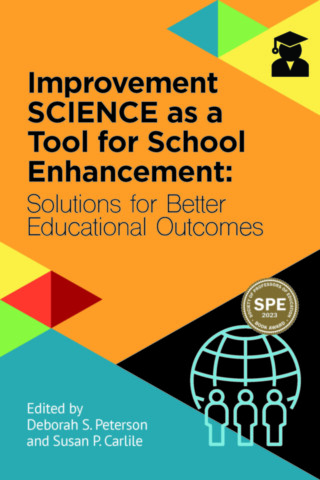
E-books are now distributed via VitalSource
VitalSource offer a more seamless way to access the ebook, and add some great new features including text-to-voice. You own your ebook for life, it is simply hosted on the vendor website, working much like Kindle and Nook. Click here to see more detailed information on this process.
Library E-Books
We are signed up with aggregators who resell networkable e-book editions of our titles to academic libraries. These editions, priced at par with simultaneous hardcover editions of our titles, are not available direct from Stylus.
These aggregators offer a variety of plans to libraries, such as simultaneous access by multiple library patrons, and access to portions of titles at a fraction of list price under what is commonly referred to as a "patron-driven demand" model.
Improvement Science as a Tool for School Enhancement is a collection of equity-focused improvement science-in-action, school-based case studies led by practitioners. Chapter authors tell us how and why improvement science principles make system-wide improvements in classroom practice, how they learned from the problems encountered and further, how they were then able to make changes within a school or district. A core principle of improvement science is variability in context (what works for whom and under what conditions), a critical concept for improvement in each of the case studies. How to use improvement science to address education disparities system-wide with urgency, commitment, and a belief in the success of every child, of every race, every ethnicity, gender, ability, and cultural identity, is the essence of this book.
More
E-books are now distributed via VitalSource
VitalSource offer a more seamless way to access the ebook, and add some great new features including text-to-voice. You own your ebook for life, it is simply hosted on the vendor website, working much like Kindle and Nook. Click here to see more detailed information on this process.
Library E-Books
We are signed up with aggregators who resell networkable e-book editions of our titles to academic libraries. These editions, priced at par with simultaneous hardcover editions of our titles, are not available direct from Stylus.
These aggregators offer a variety of plans to libraries, such as simultaneous access by multiple library patrons, and access to portions of titles at a fraction of list price under what is commonly referred to as a "patron-driven demand" model.
Many people believe that “education” has a disproportionately negative effect on them and those close to them. With so much wealth, technological prowess, innovation, and economic development, why do we still have marginalization, social inequalities, conflict, mass incarceration and generational poverty? The connection to democracy, Education for Democracy (EfD) and social justice is, for Carr and Thésée, clear, and this volume interweaves a narrative within these themes based on a Freirian theoretical backdrop. This book presents a vision for transformative education and EfD, seeking to cultivate, stimulate and support political and media literacy, critical engagement and a re-conceptualization of what education is, and, importantly, how it can address entrenched, systemic and institutional problems that plague society. Based on over a decade of empirical research in a range of contexts and jurisdictions, the authors strive to link teaching and learning with agency, solidarity, action and transformative change within the conceptual framework of a critically-engaged EfD. Perfect for courses in: Sociology of Education; Social Justice and Education; Democracy and Civics; Community Engagement; Education Policy; Service Learning; Education Reform; Citizenship Education; Transformative Education; Politics of Education.
More
E-books are now distributed via VitalSource
VitalSource offer a more seamless way to access the ebook, and add some great new features including text-to-voice. You own your ebook for life, it is simply hosted on the vendor website, working much like Kindle and Nook. Click here to see more detailed information on this process.
Library E-Books
We are signed up with aggregators who resell networkable e-book editions of our titles to academic libraries. These editions, priced at par with simultaneous hardcover editions of our titles, are not available direct from Stylus.
These aggregators offer a variety of plans to libraries, such as simultaneous access by multiple library patrons, and access to portions of titles at a fraction of list price under what is commonly referred to as a "patron-driven demand" model.
Navigating Media Literacy: A Pedagogical Tour of Disneyland is an education playbook applied to the vast mediated universe of Disney. Readers of all ages can critically apply media literacy principles while still conscientiously participating as consumer-citizens, media creators, and agents of change. Media literacy is defined throughout this book as an instructional method rather than a political movement. The book counterbalances the frequently myopic critiques of cultural scholars and the critical exemption granted by those across the world who find Disney to be a source of great pleasure. Integrated theory and practical examples allow readers to investigate of themselves and draw their own conclusions based on real inquisitive, observatory, and creative experiences that constitute media literacy (access, analyze, evaluate, create, reflect and act). Each chapter is ideologically mapped to an actual physical realm of Disneyland (e.g., Main Street, USA; Adventureland; Tomorrowland; Frontierland; Fantasyland). Each site provides a pedagogical playground for experimenting with each media literacy concept (e.g., context, audience, language, ownership, representation). The reader will come away with a deeper pedagogical understanding of how to cultivate media literacy using any context or subject—not just Disney. Each chapter includes discursive excerpts from students, along with assignments, discussion prompts, and classroom exercises, making it a valuable resource as a classroom textbook.Perfect for courses such as: Media Literacy | Communication and Media Arts | Film Studies | Media History | Transmedia Studies | Business | Marketing
More
E-books are now distributed via VitalSource
VitalSource offer a more seamless way to access the ebook, and add some great new features including text-to-voice. You own your ebook for life, it is simply hosted on the vendor website, working much like Kindle and Nook. Click here to see more detailed information on this process.
Library E-Books
We are signed up with aggregators who resell networkable e-book editions of our titles to academic libraries. These editions, priced at par with simultaneous hardcover editions of our titles, are not available direct from Stylus.
These aggregators offer a variety of plans to libraries, such as simultaneous access by multiple library patrons, and access to portions of titles at a fraction of list price under what is commonly referred to as a "patron-driven demand" model.
Womanish Black Girls/Women Resisting Contradictions of Silence and Voice is a collection of essays written by varied black women who fill spaces within the academy, public schools, civic organizations, and religious institutions. These writings are critically reflective and illuminate autobiographical storied-lives. A major theme is the notion of womanish black girls/women resisting the familial and communal expectations of being seen, rather than heard. Consequently, these memories and lived stories name contradictions between “being told what to do or say” and “knowing and deciding for herself.” Additional themes include womanism and feminism, male patriarchy, violence, cultural norms, positionality, spirituality, representation, survival, and schooling. While the aforementioned can revive painful images and feelings, the essays offer hope, joy, redemption, and the re-imagining of new ways of being in individual and communal spaces. An expectation is that middle school black girls, high school black girls, college/university black girls, and community black women will view this work as seedlings for understanding resistance, claiming voice, and healing.Perfect for courses in: Adolescent Development, American Studies, Black Studies, Educational Anthropology, Latino Studies, Multicultural Education, Social Foundations of Education, Sociology and Women's Studies.
More
E-books are now distributed via VitalSource
VitalSource offer a more seamless way to access the ebook, and add some great new features including text-to-voice. You own your ebook for life, it is simply hosted on the vendor website, working much like Kindle and Nook. Click here to see more detailed information on this process.
Why is the sense of taste so conspicuously absent from contemporary educational research and so severely rationed in the ways it is lived in universities and schools? After all, in the world, taste is a perceptual and epistemological powerhouse in the complicated process of staying alive as well as living a life. Taste is also a process of world making. It’s a way of reading, naming, mapping, imagining, remembering, and making worlds and connecting to the worlds of others--therefore it is curricular. In attending to how taste matters and matters of taste, chapters in Tasting Education: Viewing Curriculum, Pedagogy, Learning, and Educational Research Through the Sense of Taste invite participants to think about taste as a sense, and/or the sense of taste, as it plays out in the thinking and doing of education and its inquiry. This book takes up taste as an embodied set of meanings that are sensuous, pragmatic, and political: as a key part of the sensorium, and as engagement with the sensuosity of the olfactory, the nose, the mouth, the tongue as a way of making meaning of food, but also ways for making meaning from the food for thought and action that theory can provide. It also asks us to take into account the culture of food as it relates to education; whose palates are catered to and whose remain marginalized, deliberately destroyed, or are left-unfed? Taste, then, also becomes a way of resisting, challenging, and reimagining such modes as they play themselves out in curriculum and pedagogy and reveal collective commitments that include shared pleasure alongside political and social action (Siniscalchi, 2018). This book offers a space for deeper conversations around taste in curriculum and elsewhere, and how taste is being used to dismantle oppression in these spaces. The slow-food movement argues that “taste and pleasure” must return to the table (Siniscalchi, 2018). Tasting Education invites the mixed pleasures and problematics of taste to the table of educational research as well. Tasting Education will appeal to faculty and students in graduate-level courses related to curriculum, instruction, social foundations and leadership studies, as well as those involved with food studies courses.
More
E-books are now distributed via VitalSource
VitalSource offer a more seamless way to access the ebook, and add some great new features including text-to-voice. You own your ebook for life, it is simply hosted on the vendor website, working much like Kindle and Nook. Click here to see more detailed information on this process.
Hauntings, Remembering, and Aesthetics offers an intimate, artful exploration of what is lost—and what remains—when schools are closed. Grounded in the stories of two shuttered public schools in Chicago, it weaves together research, narrative, memory, and visual art to honor the communities shaped by these institutions and reckon with the systemic forces that led to their closure. Drawing from archival research, local records, personal memories, and conversations with former students, educators, and community members, the author—who has a personal connection to each school—reconstructs the histories left behind by braiding their voices with collages and photographs. The book makes visible the deep ties between school communities and the neighborhoods they served. This powerful storytelling serves as a prompt for reflection and reconsideration of school closures.The portraits that emerge tell of schools that operated under immense financial strain but built strong, nurturing environments through resourcefulness and relationships. Participants recall staff who shaped their lives, naming teachers and leaders as transformative figures in their youth. They speak openly about the racism, classism, and broken promises surrounding public education in gentrifying neighborhoods—where public housing was demolished and communities were displaced. In their words, school closures were not isolated policy decisions but outcomes of a broader inequality and disinvestment. Far from passive witnesses, these community members critically examine the past, theorizing their experiences and naming the systemic failures that framed them. They express a desire to pause, reflect, and remember—to reclaim the memory of their schools as spaces of resilience, joy, and collective resistance. As one participant shared, “There’s so much history in us.” That history, the book argues, is too often erased in mainstream narratives about school closures. By presenting these stories through both visual and literary forms, the book creates a new kind of archive—one grounded in lived experiences and presented through aesthetics. It invites educators, parents, policymakers, journalists, and anyone invested in public education to listen differently: to hear what was lost when the schools closed, and to recognize what still echoes in the voices of those who remember.This is not just a story of the past—it is a call to action in the present through stories that have always been here. These acts of remembering resist the dominant, data-driven narratives that often justify school closures. It reveals the human cost of policies disconnected from community realities and asks us to imagine more just futures for public education in our cities. This book asks us to see and hear stories anew, through the haunting beauty of memory, artwork, and collective reflection.Perfect for courses such as: Social Foundations of Education; Educational Policy Studies; History of Urban Education; Sociology of Education; Teacher Education in Urban Education; Historical and Cultural Contexts of Urban Education; Qualitative Research Methods; Arts-based Research Methods; Visual Research Methods
More